Was James Buchanan a Racist? Libertarians and Historical Research

Note: if you are here because of my discussions of Nancy Maclean’s book, I have several follow-up posts to this one:

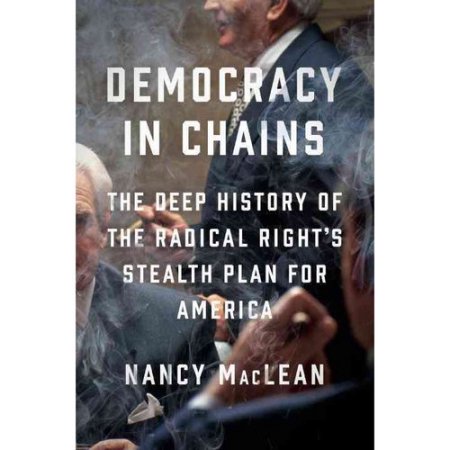
This is the cover a new book by Duke historian Nancy MacLean. I was dreading reading it because MacLean is a terrific historian; I’ve long admired her history of the twentieth-century Ku Klux Klan, Behind the Mask of Chivalry. This new book appeared to be the history I am working on: its thesis is that the white south’s program of Massive Resistance to Brown v. Board of Education was the start of the right wing’s current attempts to disenfranchise voters and to undermine democracy in order to let the free market operate.

MacLean’s book turns out to be much different from the one I hope to write; her focus is on economist James M. Buchanan who moved easily in the corridors of power in Virginia and beyond. The folks I’m interested in consider Buchanan a pseudo-libertarian for these very reasons. In many ways, MacLean’s book is a story of the straightforward successes of libertarians and I hope my work can complement her achievement.

Needless to say, the libertarians, particularly those of Buchanan’s “Public Choice” school, are not happy. Not at all. They feel MacLean has misrepresented Buchanan and public choice theory and, worse, committed historical malfeasance by altering quotations and quoting out of context. There is a lot of dust in the air right now, and a lot of charges being thrown around. Rather than trying to sort out everything going on, I’ll focus on one particular question:

Was James M. Buchanan a Racist?
Continue reading

Those Radicalized Immigrants: “Alternative Facts” From Fake Experts

Supreme_court

This just in: the Supreme Court has agreed to hear the appeal of the Trump administration on the Muslim ban. Over at Breitbart, this news was greeted with the headline: “The Supreme Court Reinstates Trump Travel Ban from Muslim-Majority Countries!”  Well, not quite. First, calling it a “travel ban” is what got Trump into trouble with the Courts in the first place and the Administration tries hard to reign in The Donald when he foolishly tells the truth about it. Second, the Court did not “reinstate” the entire ban, indeed, they upheld parts the stay.. Finally, by the time this gets sorted out, the ban will have expired, the Administration will have to start all over again with a new order without passing GO and without collecting their 200 refugees at the border. In summation: apart from being wrong in nearly every single particular, Breitbart nailed it.

Let’s think about the line of reasoning the makes the Muslim ban so popular among the Alt-Right.  The basic argument looks pretty much like this:

Stop the illegal tide of immigration. Despite the secrecy of our Immigration Service and cooperating agencies on this subject—a secrecy utterly without justification and which could be desired only for concealing enormous irregularities—some of our Congressional spokesmen now claim that hundreds of thousands of immigrants, largely Muslim, are coming across our borders, legally and illegally. From my own studies of immigrants, I know that among them are many pro-Jihad. But all Muslim immigrants, Jihad and anti-Jihad, immediately after arrival are under strong pressure to side with the radical Muslim groups, and most of them will have to yield.

What can the history of the Alt-Right tell us about this line of reasoning?

Continue reading

Virginia Is for (Same-Race) Lovers

Ok, my title isn’t precisely what it says on our license plates:

Virginian_license_plate_(2014—present)

But until 1967, interracial marriage was illegal in Virginia, as it was in 24 other states. Fifty years ago today, on June 12, 1967, the Supreme Court ruled that laws prohibiting interracial marriage were unconstitutional. Today is Loving Day!

The case was Loving v. Virginia. If you wrote a novel whose centerpiece was a court case on marriage named “Loving v. Virginia” the editor would send the manuscript back to you with a note reading, “Contrived. Change the name.” But that was the name of the couple who challenged Virginia’s laws against interracial marriage.  As the kids say today, “For reals.” (The kids still say that, right?)

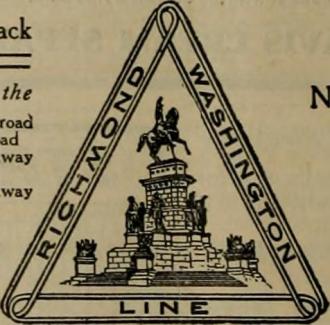
In the late 1950s, Richard, a white man, and Mildred, a black woman, fell in love and wanted to get married. Because it was illegal in Virginia for them to do so, they hopped on a train up to Washington, D.C. and got married there.

richmond_washington

In Virginia, they were arrested. The case eventually reached U.S. Supreme Court which overturned Virginia’s miscegenation law in 1967.

Continue reading

You Make Me Feel Like a Natural Racist

There is a brand new Pew Poll out that indicates that interracial marriage has increased five-fold  in the fifty years since the US Supreme Court found laws banning it unconstitutional in Loving v. Virginia. Of course, almost half of Republican voters in Mississippi think interracial marriage should still be illegal. Over at the Alt-Right site, American Renaissance they disapprove of interracial marriage (surprise!).

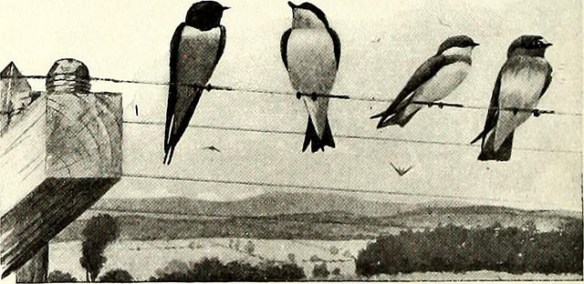
birds_flock

The rise in interracial marriage seems to belie an old racist idea summarized by the old cliché, “Birds of a feather flock together.” This idea is that it is natural for people of one race to separate themselves from those of a different race. Even today, scientific racists try to offer all kinds of arguments  about how natural race prejudice is. (I’ve published some criticisms of these kinds of arguments here and here.)

Continue reading

William F. Buckley, Jr., the Respectable Right, and Human Equality

right_wing

The right wing. Is there anything better than a visual pun?

The “Alt” in Alt-Right has a double meaning. On the one hand, “alt” is German for “old” and the Alt-Right claims to be the heirs to the isolationist right of pre-World War II America.  On the other, “alt” is also short for “alternative” making the Alt-Right the alternative to the mainstream right wing of American politics. So, you might ask the Alt-Right: what is the “mainstream” right of American politics to which thou art alternative?

You could write a several terabytes on trying to define such a vexed question and people have. Let’s take this handy summary provided by a recent book on conservative politics by George Hawley:

  • Conservatives call for limited, if any, government intervention in the economy.
  • Conservatives hold that tradition, particularly religious tradition, should guide public policy.
  • Conservatives are for a strong military and a strong American military presence in the world.

The Alt-Right holds itself as an alternative to these positions in various ways: Libertarians would claim that limited government might be an improvement over the status quo, but it is still inherently inferior to no government; Randians would claim that tradition, especially religious tradition, is no way to run society; isolationists would withdraw from the world rather than engage with it through our military.

Shifting our focus from the “alt” to the “right” we get a different question: what makes all these differing ideologies “right?” The answer is that both alt and mainstream right adhere to one common tenet: the rejection of “equality” as a supreme value. According to Hawley, the Left seeks equality as the highest value while the Right can and does hold other values as more important than equality. Political theorist Corey Robin argues that the mark of the Right is that it opposes the equal distribution of power. Only a certain kind of people should be making decisions in society; the rest are just not up to the task of governing. Hence, appeals to equality are suspect in all right wing discourse, whether alt or mainstream.

Continue reading

The Racist Right and that Island in the Pacific

Trivia Question: What city (pop. over 100,000) is farthest away from any other city? The answer is….Honolulu. We don’t think of Honolulu as a remote city because it gets about 8,000,000 visitors a year. There are certainly other cities that are harder to get to. Hawai’i is both very, very remote from the world as well as very connected to the world. Which leads us to our Attorney General, Jeff Sessions. You see, a federal judge blocked Trump’s latest Muslim Ban as unconstitutional. In an interview, Sessions assured conservatives the Trump Muslim ban will eventually be upheld by the Courts:

I really am amazed that a judge sitting on an island in the Pacific can issue an order that stops the president of the United States from what appears to be clearly his statutory and Constitutional power.

Trump has lost three in a row on this issue, and the final disposition of the case appears to be a long way away. Rather than focusing on why the ban is a within the President’s power, Sessions chose instead to issue this weird remark about Hawai’i. So, it is worth trying to figure out why he would say such a weird thing.

Continue reading

Neil Gorsuch and the Problem of Racial Segregation

So far, the two most exciting things that happened during Neil Gorsuch’s nomination hearings for the Supreme Court was him admitting he had no clue how to keep that trucker from freezing to death other than, “It would suck to be that guy.” and a wonderful Marshal Mcluhan moment when the Supreme Court struck down one of Gorsuch’s rulings during his second day of testimony.

If you want a detailed analysis of how Gorsuch has ruled in key cases, there are places you can do that. I want to focus on Gorsuch’s judicial philosophy. He’s an advocate of a doctrine called “originalism.”  There are different forms “originalism” can take, but the idea is that judges should base their decisions on the “original meaning” of the Constitutional provision in dispute. Is there a question about what “equal protection” of the Fourteenth Amendment means? The answer lies in the past: what did the phrase mean when the Amendment was passed? For those of you scoring at home, that’s 1868. Gorsuch is quite explicit about how judges should make decisions:

Judges should instead strive (if humanly and so imperfectly) to apply the law as it is, focusing backward, not forward, and looking to text, structure, and history to decide what a reasonable reader at the time of the events in question would have understood the law to be—not to decide cases based on their own moral convictions or the policy consequences they believe might serve society best. (p. 906)

The motivation for this view is rather noble, at least on the surface. Judges are very powerful figures in government. Often appointed, not elected and often for life. They do not answer to the people as legislators or executive branch members do. Supreme Court Justices are the ultimate authorities, US Supreme Court decisions are binding on us all and can only be overturned by the Supreme Court itself, or perhaps through the difficult process of amending the Constitution. By grounding judicial decisions firmly in the past meaning of the statute or Constitution, originalism, purports to be a principled way to settle disputes. The alternative, Gorsuch claims above is a judge’s “moral convictions” (read: “personal whim”) or “policy consequences they believe might serve society best” (read, “best guess”). Originalism purports to be a method of reining in the power of judges, what is often called “judicial restraint.” The legislature, because it is more directly reflective of the democratic will of the people, originalists argue, are better suited to make policy. Defer to the people (legislature or Congress) unless the “text, structure, and history” clearly direct you to overrule them.

That’s the theory, anyway. In reality, originalism operates nothing like this. There is no reason to think that originalists are any less activist in turning over legislative decisions than adherents of other forms of jurisprudence. More worrying is that orginalism is merely a convenient way for judges to enact their conservative and reactionary policy preferences. It seems to me, given the backward-facing nature of originalism, it is designed to promote reactionary politics. A look at the history of Brown v. Board of Education is a good example of this.

Continue reading

Sebastian Gorka and the Tale of the Subversive Hungarians

news_from_abroad

Just in case there was any doubt in your mind, we now have an official declaration that the Muslim ban is aimed at Muslims. The loud and repeated howling from Candidate and now President Trump gives us all the evidence we need to conclude that the Muslim ban is aimed squarely at Muslims. Or, as the Court concluded in Trump’s most recent defeat: “The record before this Court is unique. It includes significant and unrebutted evidence of religious animus driving the promulgation of the Executive Order and its related predecessor.” Most 70-year olds know that words carry consequences, but apparently Trump has yet to learn that lesson.

The vetting process for refugees is long, complicated, and thorough. This might explain why there have been no fatal terrorist attacks from the countries targeted by the Muslim ban. But! One thing we hear from the Alt-Right is that we need to ban Muslim refugees because the governments of those countries have collapsed and therefore we cannot discern who is dangerous and who is not. Breitbart “News” among others often circulates this claim (do I need to tell you that this claim isn’t really true?). Therefore, the vetting process is not only useless, it is all but impossible. We heard the same thing from the American right sixty years ago.

Continue reading

White Babies Only?

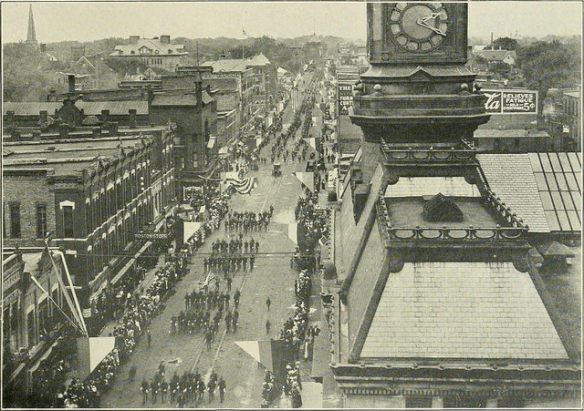
I usually don’t talk about this because I want people to love me for who I am rather than the glamour of my past life, but I grew up in Fort Dodge, Iowa. Yes, the same Ford Dodge that was home to Karl King, famous composer of marches, considered the equal of John Philip Sousa. But, people ask, wasn’t he P.T. Barnum‘s favorite composer and didn’t he compose Barnum & Bailey’s Favorite March? Yes, I admit modestly, the very same Fort Dodge. Speaking of circuses, they often continue, wasn’t Fort Dodge where the gypsum was mined to create the famous hoax, the Cardiff Giant? Yes, indeed, I tell them. In fact, a highlight of the Fort Dodge Fort Museum is a replica of the very same giant. But Fort Dodge wasn’t all circus music and beloved fake giants. I loved Dolliver State Park, named after U.S. Senator John Prentiss Dolliver, a well-respected and formidable politician. Here’s downtown Fort Dodge in 1909, when Dolliver was making us all proud:

Fort_dodge

Continue reading

Jeff Sessions, Madison Grant, and the Gopher State

tminnesota

I moved to Minnesota when I graduated college in nineteen-mumblemumble. Met my lovely wife there, got married there, had my first grownup job there, went to graduate school there, and I loved all of it. My godson lives there and my kids’ godmothers live there. We moved out in December 1993 but I’d move back there in an instant. The Twin Cities are awesome.

When I moved out, a quarter century ago, the Twin Cities was home to much more than Prairie Home Companion and lutefisk. By 1993, the Cities had already received several immigrant waves of Hmong from Vietnam and Laos, and Somali immigration was just beginning. Now there are tens of thousands of Somali immigrants in Minnesota.

Continue reading